Sunday, July 10, 2016

Portugal Crowned "UEFA EURO 2016" Champions

Portugal Crowned "UEFA EURO 2016" Champions

After one whole month of absolute top class football in the UEFA European Championship, Portugal has taken their first title in the prestigious tournament, winning 1-0 against host France in a.e.t. in the Final. The late goal came from substitute Eder (109’) even causing Ronaldo to break down into his signature tears.
30 days, 51 matches and 108 goals later in this exciting tournament, France progressed with comfort to the finals, even beating out 2014 World Cup Champions Germany in the semi-finals. On the other hand, Portugal advanced with relatively underwhelming results, finishing third in their group stage and even seeing captain Cristiano Ronaldo being forced off with an injury just after 25 minutes of play. This marks the second time Portugal has reached the finals, losing to Greece in 2004 as hosts . France has won the title twice: once in 1984 as hosts and again in 2000.

NEW MUSIC: Rihanna – Sledgehammer / Tyga – 1 Of 1 / Fergie – M.I.L.F $


Rihanna decides to debut her latest offering called Sledgehammer. This will appear on the soundtrack to Star Trek Beyond.
                       

Tyga returns with the official visual for his latest single called 1 Of 1, which was shot in Jamaica.
2016                         

Fergie is back with the release of her latest visual called M.I.L.F $ directed by Colin Tilley.

THE RAPGAME is back!!! July 22nd

L_Rap_Game_S2_Premiere_Key_Art_Vertical

Friday, July 8, 2016

#ARTBYSKIP "PREP LIFE"


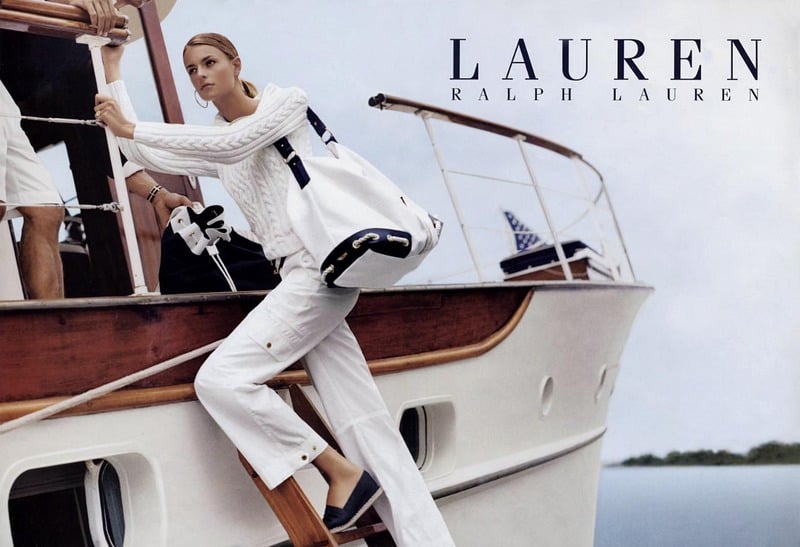
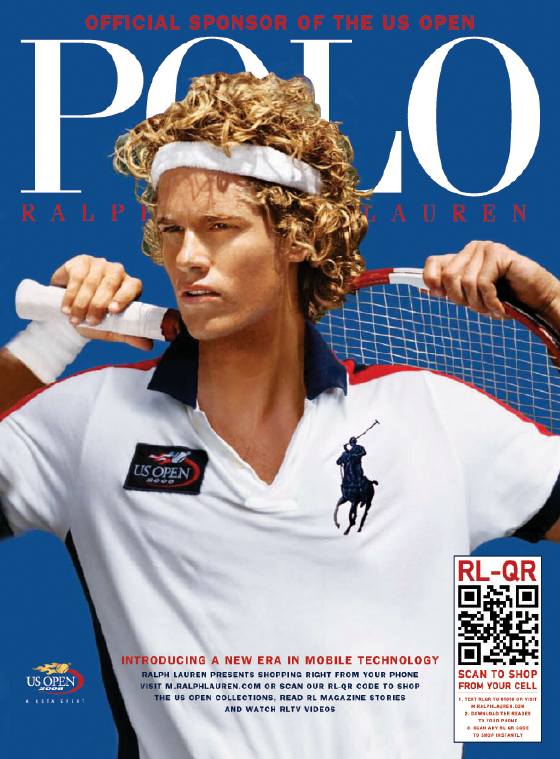
THE GOAT!!! How Ralph Lauren Nurtured the Biggest Names in Modern Menswear

How Ralph Lauren Nurtured the Biggest Names in Modern Menswear
Ralph Lauren has undeniably made his mark in menswear with his multi-million dollar brand and fashion empire that has become a cultural institution in its own right. Outside of sales figures and sheer influence, however, is also a legacy that the man has created in the form of an entire cohort of influential menswear designers who were formerly employed under Ralph Lauren but have since gone onto creating their own significant brands. Collectively referred to by the insider term “Ralph Lauren University,” valet. magazine tracked down some of the most prominent graduates, including the likes of Todd Snyder, Frank Muytjens, John Varvatos, Michael Bastian and Sid Mashburn, to find out what it was like to work under Ralph Lauren, and what they have taken away from their experiences since to put into their own labels. Read an excerpt below and find the full editorial here.
Why work at Ralph Lauren?
Todd Snyder: He’s the king. I would save every penny working in high school and college to buy Polo clothing. I read his first book in the ’80s and that’s what I wanted to be.
Is there a “Ralph Lauren” way of doing things?
Michael Bastian: I think it all starts with those massive inspiration boards for every project and season. I definitely bought into that one. First thing we bought for the office here was a huge rolling cork board and a million aluminum push pins.
Favorite part of the job?
Frank Muytjens: Just the fact that you’re literally surrounded with good taste. It really gave me the opportunity to immerse myself in American history, icons and culture. To have the opportunity to work on the collection and see it come together is like being a part of a really good movie set.
The hardest part of the job?
Michael Bastian: Getting dressed every morning.


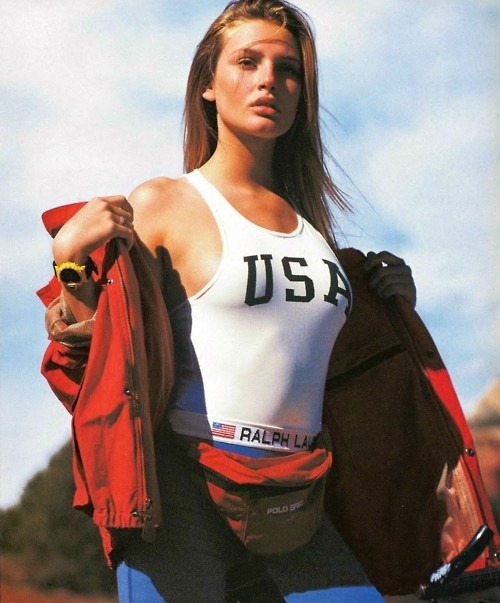
FASHION: Thirstin’ Howl the 3rd Talks the History of Hip-Hop's Relationship With Polo Ralph Lauren "THIS IS DOPE BUT I REALLY FEEL THE AUGUSTA PREPS OF THIS TIME & RIGHT BEFORE DID IT JUST AS HARD!!! (85 - EARLY 90'S)

Thirstin’ Howl the 3rd Talks the History of Hip-Hop's Relationship With Polo Ralph Lauren
It was in the late ’80s when like-minded teens around the Brooklyn area first joined forces together, bound by a shared love for the Polo Ralph Lauren brand. The youths’ adoption of such a luxury brand, whose hallmark lay within preppy, upper-class demographics and high-end department stores caught like wildfire, eventually reaching New York City cats and hip-hop mavens like Raekwon, Ghostface Killah, Just Blaze and more. Since 1988, co-founders Thirstin’ Howl the 3rd, Fi-Lo, Dallas Penn and Rack-Lo have made it their mission to accumulate as much Polo as possible and by any means necessary, spawning a global culture that still exists to this day (just check out Japan’s Upper Upper crew).
Over the last five years, Thirstin Howl worked with photographer Tom Gould to gather old memoirs, polaroids and photographs in a compiled history of the Lo Life crew and Polo culture for the first time. Bury Me With the Lo On features 264 pages that document the Lo-Life origin story and its influence beyond. To coincide with the book launch, GQ caught up with Thirstin Howl the 3rd a.k.a. “The PoloRican” to learn how a young man’s chase for all things Polo lead to the worldwide movement it is today (an excerpt of which appears below).
Limited to 1,500 copies worldwide, Bury Me Wth the Lo On is now available for purchase online for $65 USD. Learn more about Lo Life in our editorial about the classic sports cap and subsequent trends.
For the uninitiated, can you tell our readers what a Lo Life is and what they are all about?
A Lo Life comes from the last syllable of Polo, Lo. It means that you live the live of Lo. You were a Polo enthusiast. You wore the clothes and lived that lifestyle out in the streets. It’s always LO, never LOW.
Tell us about the style culture in New York in the late 80s and early 90s, when you guys were coming up.
New York was really grimy and gritty and hip hop was still evolving. I was a breakdancer and so, before Polo, I wore the Adidas suits, Kangols, the sheepskin jackets, all that. A lot of the bold colors and styles of those clothes were perfected later on with Polo. Polo was very exclusive and you couldn’t get it in the ghettos. Being from the projects, these were clothes you had go on a journey (ed note: shoplifting expedition) to Saks and Bloomingdale’s to procure. We all lived hip hop and so the Polo just helped us describe ourselves as hip hop. Polo became our religion.
It said a lot about your confidence and character to be rocking thousands of dollars worth of Lo in the projects and to clubs where people were ready to jack you at any moment. The Lo Lifes were arguably the first street-style stars, rocking Polo to every club and event and getting photographed by people outside the culture for our incredible looks. As a Lo Life, you had to have the newest, and combine it in cool ways. That’s why the style became so exaggerated, everyone was trying to one up one another. Cats would bring Polo to hold when they couldn’t fit any more on their body. We made our own custom garments from stuff we stole, like XL shirts made out of 3 or 4 $500 silk scarves. There was a lot of creativity.
A lot of us came from broken homes and had a lot of problems so the clothing helped us to get through a lot of hard times. Cats would never know what you were going through when they saw you dressed in the Lo. The garments gave us new identities.
Were you guys always rocking all Polo from head to toe, or would you style the Lo with other brands?
Sometimes we would be head to toe Lo but we would definitely style it with other brands. Like, Guess Jeans were the hottest thing ever back in the day so if you had those jeans with the Polo, you were the ultimate. We had Gucci, all types of sneaker and hats brands. What people don’t realize is that we literally touched every brand. We happened to be very knowledgeable about Lo but we wore every brand that was hot in the street and a part of hip hop culture. I personally didn’t really care about the quality or the construction or the materials. I just cared about how it looked and how it made it me feel. Who knew these pieces would last 30 years? I was just living day to day and dressing for the moment.”

ENTERTAINMENT & FASHION: Lucien Smith Doesn't Want to be Another New York Artist, It's "Pretentious and Unhealthy"/ The New York Times Gives Us a Glimpse Inside the Life of visvim's Hiroki Nakamura


Lucien Smith Doesn't Want to be Another New York Artist, It's "Pretentious and Unhealthy"
Los Angeles-born, New York City-based painter Lucien Smith had already achieved millions dollar sales before he had reached the age of 25. Today we see the 27-year-old artist leave behind the bustling city’s organized chaos that spawned his career for the quiet countryside — a move he considers necessary for his growth as an artist. Canadian retailer SSENSE caught up with Lucien at his humble home in Montauk, where the weather is agreeable and the peaceful Hamptons seaside serves as a haven for his thoughts. In this feature, Lucien dons pieces pulled from Maison Margiela, Lanvin, Rick Owens, and Dolce & Gabbana in a shoot captured by photographer Angelo Baque.
Find our favorite excerpts from the conversation below and read the full piece over at SSENSE. Explore more of Lucien’s artwork and portfolio over on his website.
We normally think of cities as the place where modernity happens. But, as a young contemporary artist, you’ve gravitated towards spending your time in the countryside. Why is that?
I mainly began coming out to Montauk because I was sick of the city. When I was younger and going to college, New York City was a good place for me to meet other artists and get inspired. But at a certain point it became really counterproductive. I realized that everyone in the city is trying to be famous or something. And I was subscribing to this idea of what a New York City artist was that was really pretentious and unhealthy. After the first four years of me showing, it became evident to me. I’m not interested in being a New York art star. I’m not interested in being a Dash Snow or a Dan Colen. It all kind of just came to a point where I couldn’t take it anymore.
Your recent work focuses a lot on landscape. In what ways does nature inspire your work?
It connects to my exodus of moving out here, which also has a lot to do with an existential crisis about trying to figure out why I even make art. If nothing matters, then what’s the point of making anything? To satisfy some art market? Or is it because I take pleasure in making paintings? I’ve been trying to understand what the point is. Lately, I’ve just understood that if my time here is limited, I should enjoy my experience, enjoy nature, and enjoy people. Which is why I’ve spent most of my time going on trips and photographing and developing interests that bleed into what I’m painting.
I mean, it resonates with this old school, 19th-century idea of how we understand painters. As guys sitting out in fields with canvases.
Yeah, but I don’t necessarily consider myself an impressionist or plein air painter. I wrote an essay that I published called “The Accidental Tourist,” which is kind of about the evolution of this process. With the Internet and phones today, there’s this thing about escapism. We’re constantly looking at images to try to teleport ourselves from whatever situation we currently are in. But back in the 19th century, they didn’t have that. The reproduction of images wasn’t as accessible as it is now. So they actually had to travel to the countryside to find these picturesque settings. But most of the images that I paint from today are from photographs.
So you’re in the countryside and painting other countrysides from your phone.
Also publications, magazines, and books. Scanning these images. I live here, but I’m not necessarily going out to the bluff painting that view. I’m maybe painting views of things, places that I wish I could travel to but I can’t, and then also places that have a more conceptual significance. So some of the last paintings that I made were of volcano eruptions. It wasn’t necessarily about me wanting to go to these places. It was about the idea of a volcano, and the creation of land, and its relevance to landscape.
So do you feel like you’re giving something up by not being around?
Generating sales is not really the most important thing for me. Especially living out here, the money that I spend day to day is significantly less than it was in the city. I don’t have a humongous overhead on my studio and my apartment. I don’t have assistants. I don’t need to be making art sales to keep my studio or my business alive. And without that pressure it really creates a freedom for me. For the first time, I feel like a real artist.
And what does that feel like?
It’s liberating, man. It’s something that I want to share with other artists. I want to teach that to a younger generation eventually. I want to open up my studio to be able to do open critiques with other artists out there and really try to set a model. Because the model that was set for me when I was younger, it wasn’t a healthy model. It was about sucking up to collectors and trying to sell for the highest prices. That stuff isn’t real. That’s not art. For the last four years, I’ve been trying to create this nonprofit called STP [Serving the People]. It’s about spreading awareness about health and how to make a creative environment. I want to provide a place for people outside of school and people who haven’t gone to school to be able to talk about and share their work before it goes out into the world. So they can get critique and positive feedback from their peers
 The New York Times Gives Us a Glimpse Inside the Life of visvim's Hiroki Nakamura
It was only late last year that The New York Times highlighted some of Hiroki Nakamura’s most prized-possessions. Now, in this most recent profile, the publication delves in a little deeper to find out what makes the visvim designer tick. The article also reveals that NYT writer Guy Trebay actually got to visit Mr. Nakamura in his home in Tokyo, Japan — a 220-year-old wooden house that was built around a lush garden. Some notable things inside it; a large collection of first-press vinyl records, a 1970′s JBL Paragon D44000 speaker unit, and a cabinet filled with old textiles — precious fabrics and weaves that come from places like Kolkata, old Navajo reservations, the Herat province in Afghanistan and Nepal.
The article also reveals some personal details about Hiroki’s life. He spends pretty much half of the year in Tokyo, and the other half in Los Angeles with his Wife Kelsi to devote time to his daughter Riko from a previous relationship. The story also shows the designer’s passion for the old traditions of garment making — Nakamura reveals a “rag” dyed with materials drawn from a cactus parasite that originated in the Americas. As for visvim’s first-ever fashion show at Pitti Uomo, writer Guy Trebay explains that the musical display consisting of models in kimonos, retro denim and sailor hats was something “complex” and “haunting.” He simply states it as “something imagined: America, the mirage.”
Read some quotables from the article below. The full write-up and complete images are also available at The New York Times site.
John Mayer on visvim:
“Part of what makes visvim so powerful is that it evokes something in you. My whole road case is visvim. I’m taking all the checkered madras.”
The origins of the brand:
“When I started the business, I asked myself what I wanted out of this, and I realized what I wanted was to create products that made me happy. I also wanted to build a brand that was timeless and borderless.”
Hiroki Nakamura’s inspirations:
“My inspiration mostly comes from old textiles, beautifully made stuff from the past. I always wanted to make things that, as much as the vintage stuff I am drawn to, have strong energy.”
The designer on hand-made goods:
“Machine-made goods are perfect beyond the original goal. In the modern world, goods are flat, flat, flat. And that, to me, is boring. I’m drawn to natural stuff and unevenness, and to the humanity of things made by hand.”
Gianluca Cantaro, editor in chief of l’Officiel Hommes Italia, on visvim’s American influence:
“They are an island, and will always be an island. Whatever influences they take from outside — and they are super-inspired by the United States and California life and the imagery involved with that — their vision of the U.S. is never the U.S. exactly. It’s not a quotation. It’s not a translation.”